Sandwich Panel Production Equipment
Publication Date: Oct 20, 2026
Sandwich Panel Production Equipment: produce PU, PIR, phenolic, rock wool, mineral wool, glass wool roof, wall & cold storage insulated panels with continuous automated lamination lines.

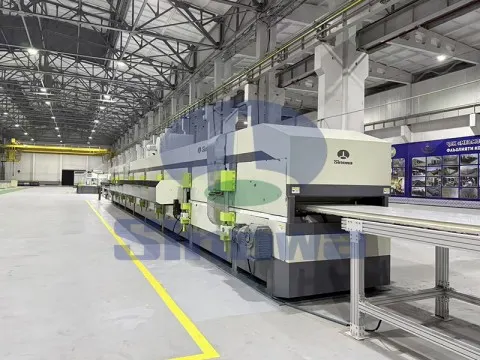
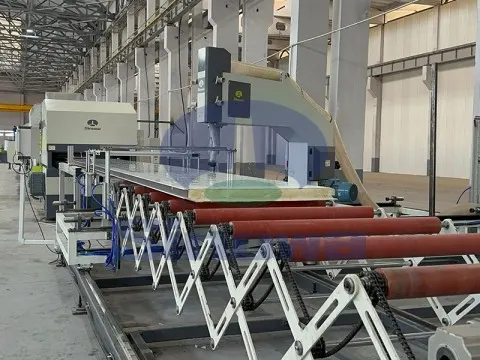
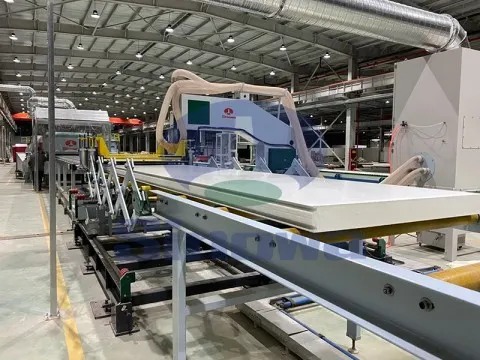
Sandwich panel production equipment serves as the core manufacturing system for composite building panels that combine rigid insulating cores with metal or non-metal facings, and this machinery can be configured to process six common core materials including polyurethane, phenolic, PIR, rock wool, mineral wool and glass wool, to produce panels used for roofing, wall cladding and cold storage applications. The overall production line is designed as a continuous automated assembly system, where raw materials are fed into the front section, undergo forming, bonding, curing and cutting in sequence before finished panels exit at the end of the line. Each type of core material requires tailored adjustments to the machinery’s feeding units, heating zones, pressing pressure and chemical injection modules, as the physical characteristics of each insulation substance differ greatly in density, reaction speed, heat resistance and structural strength. For polyurethane and PIR, the equipment is fitted with high-pressure foaming systems that accurately mix liquid polyol and isocyanate components, dispensing the blended chemical mixture evenly between the two surface sheets. For fibrous cores such as rock wool, mineral wool and glass wool, the production line uses mechanical unwinding and alignment devices to transport preformed fibrous slabs into the laminating area, with glue spreading units to apply adhesive to both sides of the core boards before they are joined with the facings. Phenolic core processing relies on dedicated low-temperature foaming and curing modules to control the chemical reaction rate of phenolic resin, preventing excessive shrinkage or surface cracking during the continuous lamination process. The finished panels generated from this broad equipment platform can be shaped into roof panels with trapezoidal profiles to drain rainwater, flat or profiled wall panels for building enclosures, and tightly sealed cold storage panels that maintain stable internal temperatures for refrigerated spaces. Operators adjust the line speed, pressure and material dosage on the central control interface to switch between different core types without fully disassembling major mechanical parts, which improves production flexibility for factories that need to supply multiple panel variants to construction projects. The integrated design of the sandwich panel production equipment ensures consistent bonding quality between the facings and insulation core, reducing the risk of delamination during long-term service on building roofs, exterior walls and cold room structures.
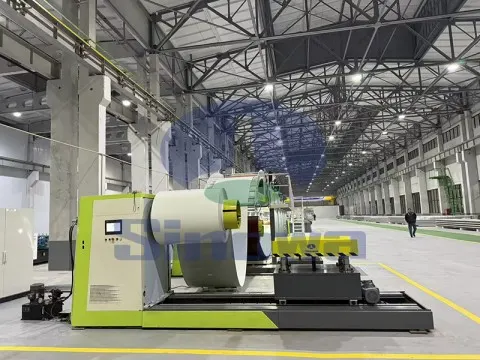
Polyurethane sandwich panel production equipment is engineered to manufacture composite panels with polyurethane foam as the central insulating layer, and these finished panels are widely adopted as roof panels, wall panels and cold storage panels in various construction scenarios. The working sequence starts with continuous unwinding of metal sheets from coil racks, where the surface materials pass through roll forming stations to create the required profiles, such as the raised ribs on roof panels that enhance load bearing and water drainage performance. The liquid polyurethane raw materials are pumped to a high-pressure mixing head mounted on the production line, and the mixed foam material is poured uniformly onto the lower moving facing sheet. As the lower sheet advances forward, the upper metal sheet is guided into position, and the whole assembly enters a double-belt laminator, which applies steady pressure and controlled heat to allow the polyurethane mixture to expand and solidify completely, tightly adhering to both upper and lower facings. The expansion ratio of the foam can be regulated by adjusting the chemical formula parameters and line speed on the equipment control system, which changes the core density and thermal insulation performance of the final panels. Cold storage panels produced by this equipment feature excellent low-temperature resistance and low thermal conductivity, making them suitable for maintaining constant low temperatures inside refrigerated warehouses and processing workshops. Wall panels made on this line deliver lightweight structural performance, helping reduce the overall dead load of building frameworks, while roof panels provide reliable weather resistance against wind and precipitation. The equipment also includes post-processing units such as trimming and sawing devices that cut continuous long panels into custom lengths according to project requirements. Operators monitor the foaming reaction status and laminator temperature in real time to avoid defects like voids inside the foam core or incomplete bonding between foam and metal sheets. Proper maintenance of the injection pumps and mixing head is essential to prevent blockages caused by cured polyurethane residue, which can interrupt continuous production and affect the uniformity of panel quality. This type of equipment focuses on stable foaming control, and it remains one of the most widely used production systems for insulated sandwich panels because polyurethane panels balance insulation efficiency and manufacturing cost for roofing, wall and cold room applications.
Phenolic sandwich panel production equipment is developed to handle phenolic resin foaming and continuous lamination, generating phenolic core sandwich panels that serve as roof panels, wall panels and special cold storage panels with outstanding thermal stability. Unlike polyurethane systems, the chemical foaming process of phenolic materials has a slower reaction rate and is more sensitive to temperature changes, so the production equipment is equipped with precise temperature control sections along the laminating tunnel to maintain a stable curing environment. Metal or non-metal facings are unwound and shaped by roll forming machines at the front end of the line, moving steadily toward the foaming station where mixed phenolic resin is distributed evenly across the lower facing sheet. After the resin is applied, the upper facing is brought into alignment, and the combined material stack enters the continuous double belt press. Inside the press, mild heat promotes the cross-linking reaction of phenolic resin, forming a closed-cell foam core that bonds firmly with the two surface layers. The pressure setting of the laminator must be carefully calibrated, because excessive pressure will compress the phenolic foam and reduce its insulation thickness, while insufficient pressure leads to uneven bonding and gaps between core and facings. Wall panels manufactured on this equipment are commonly used for exterior and interior partition walls of industrial buildings, and roof versions can be installed on low-slope roof structures where fire safety requirements are emphasized. Cold storage phenolic panels retain their insulating performance under large temperature differences between indoor and outdoor environments, resisting thermal deformation better than many other foam core materials. The equipment includes waste collection systems to capture tiny phenolic scraps generated during edge trimming, keeping the production area clean and reducing material waste. The line speed for phenolic panel production is generally lower than polyurethane lines due to the longer curing time of phenolic foam, and the control system allows fine adjustment of catalyst dosage to modify foam density and brittleness. Operators pay close attention to the surface condition of finished panels, checking for cracks or shrinkage marks on the phenolic core that can appear if the curing parameters drift out of the target range. This dedicated phenolic sandwich panel production equipment meets the manufacturing demand for insulated building panels that are used as roofing, wall and cold storage components, especially in projects requiring superior high-temperature stability of the insulation core.
PIR sandwich panel production equipment shares some mechanical structures with polyurethane panel machinery, yet it adopts upgraded chemical feeding and curing systems to produce PIR core sandwich panels for roof, wall and cold storage applications. PIR foam is a modified polyisocyanurate material with a changed molecular structure compared to standard polyurethane foam, and its foaming reaction requires higher curing temperatures inside the laminating tunnel of the production equipment. The production workflow begins with metal coil unwinding and roll forming, which shapes the facings into the profiles required for roof panels or flat wall panels. Liquid raw materials for PIR are delivered to a high-pressure mixing unit, and the blended mixture is spread continuously onto the lower moving facing sheet before the upper facing is positioned above the liquid foam. The stacked materials move into the heated double-belt laminator, where elevated temperature triggers the isocyanurate reaction to form the rigid PIR foam core. The heating sections of the equipment are divided into multiple independent zones, so operators can set different temperature values along the tunnel to manage the expansion and curing stages separately. PIR cold storage panels produced by this line feature very low thermal conductivity, making them highly efficient for reducing cooling loss in refrigerated warehouses and freezer rooms. Roof panels made from PIR core offer strong weatherproof performance and can withstand long-term exposure to outdoor temperature fluctuations, while wall panels provide lightweight enclosure solutions for industrial and commercial buildings. The equipment’s cutting unit trims continuous panels to custom lengths, and edge trimming stations remove excess core and facing material to ensure neat panel edges for easy on-site assembly. The chemical injection system of the PIR production equipment needs stricter temperature management for raw material storage and delivery, as the viscosity of PIR components changes noticeably with temperature variations. Operators regularly inspect the uniformity of foam distribution across the panel width to avoid areas with insufficient foam that would create thermal bridges in finished roof, wall and cold storage panels. The mechanical pressing force must remain consistent throughout the curing process to prevent warping of the continuous panel as the PIR foam expands and hardens. This specialized PIR sandwich panel production equipment is designed to leverage the advanced thermal performance of PIR foam, delivering high-performance insulated panels that work reliably as roofing, wall cladding and cold room enclosure materials.
Rock wool sandwich panel production equipment is built for continuous lamination of rock wool fibrous cores with metal facings, producing rock wool sandwich panels used as roof panels, wall panels and cold storage panels in many building projects. Unlike foam panel equipment that uses liquid chemical injection, this machinery uses solid rock wool slabs as the insulation core, so the front section of the line includes automatic core feeding and conveying devices. Rock wool blocks are stacked at the feeding station, and the machine separates individual slabs, aligns them end to end and transports them forward onto the lower metal facing sheet. An automatic glue spreading unit applies adhesive evenly to both the top and bottom surfaces of the rock wool core before the upper facing sheet is placed on top of the core material. The assembled composite enters the continuous laminator, which applies steady pressure at controlled temperature to activate the adhesive and create a solid bond between rock wool and the two facings. The rock wool core is composed of mineral fibers melted from natural rock, and the equipment must maintain precise alignment of adjacent rock wool slabs to avoid gaps between core segments that would weaken insulation performance. Roof panels manufactured on this line are often installed on industrial factory roofs, while wall panels serve as exterior enclosure walls and internal partition walls. Rock wool cold storage panels are selected for cold rooms that require both thermal insulation and high fire resistance, with the fibrous core retaining structural integrity under high temperature exposure. The equipment includes sawing and trimming units to cut the continuous panel into required dimensions, and dust collection systems handle fine rock wool fibers generated during cutting and edge processing to maintain safe operating conditions. The line speed of rock wool panel equipment is affected by the speed of core feeding and adhesive curing time, and operators adjust the glue application volume according to the density and surface roughness of rock wool slabs. If the rock wool core alignment drifts during conveying, gaps will appear inside the finished panel, which reduces insulation and creates weak points in roof, wall and cold storage panels. The pressing force of the laminator must be moderate; excessive pressure compresses the rock wool fibers and reduces the panel’s insulation thickness, while insufficient pressure results in poor adhesion between the core and facings. This rock wool sandwich panel production equipment is optimized for fibrous mineral core materials, supporting mass production of insulated roof, wall and cold storage panels with fibrous rock wool insulation.
Mineral wool sandwich panel production equipment shares a similar mechanical framework with rock wool panel production lines, but it is adjusted to process mineral wool core boards and produce mineral wool sandwich panels for roof, wall and cold storage applications. Mineral wool is manufactured from melted industrial mineral waste and slag, giving its fibers different elasticity and surface characteristics compared to rock wool, which means the glue spreading and core conveying systems on the equipment need fine-tuning. The production process starts with metal coil unwinding and roll forming to shape the surface sheets into the profiles needed for roof panels or flat wall panels. Pre-cut mineral wool slabs are fed automatically into the line by a core feeding conveyor system, where the machine arranges the mineral wool pieces tightly together to eliminate gaps between adjacent core blocks. The automatic glue spreader coats adhesive uniformly on both sides of the mineral wool core, and the lower and upper metal facings are combined with the glued core before entering the laminating section. Inside the laminator, pressure and mild heat activate the adhesive system, bonding the mineral wool fibers firmly to the facings to form a complete composite panel. Mineral wool wall panels are widely used for building partition walls and exterior wall cladding, while roof versions are suitable for large-span industrial building roofs. Mineral wool cold storage panels provide reliable thermal insulation for refrigerated facilities, and the fibrous core maintains stable performance under continuous temperature cycling. The equipment’s control system allows operators to adjust the speed of the mineral wool feeding conveyor to match the advancing speed of the metal facings, preventing misalignment of core slabs. Dust extraction equipment is fitted around the trimming and sawing stations to capture fine mineral wool particles created during cutting operations, protecting the working environment. Operators regularly inspect the finished panels to check for delamination between mineral wool core and facings, which can occur if adhesive distribution is uneven or laminator pressure is unstable. The density variation of incoming mineral wool slabs requires operators to adjust the pressing parameters of the production line accordingly, as softer mineral wool compresses more easily under pressure. The edge trimming unit removes excess core and facing material to produce straight panel edges, simplifying installation when these mineral wool panels are assembled on building roofs, walls and cold storage room structures. This mineral wool sandwich panel production equipment is specially calibrated for slag-based mineral wool cores, enabling continuous automated manufacturing of insulated roof, wall and cold storage sandwich panels.
Glass wool sandwich panel production equipment is designed to handle glass wool fibrous cores, producing glass wool sandwich panels for roof panels, wall panels and cold storage panels, with mechanical modules optimized for the lightweight and flexible properties of glass wool fibers. Glass wool is made from melted glass spun into fine fibers, and the core slabs are lighter and more compressible than rock wool or mineral wool, requiring gentler handling in the conveying and pressing stages of the production line. The front of the equipment includes metal coil unwinding and roll forming stations to shape the upper and lower facings. Glass wool core boards are delivered to the line by automatic feeding equipment, which arranges individual glass wool slabs closely together to prevent gaps between core segments. The glue spreading mechanism applies adhesive to both sides of the glass wool core, with careful control of glue quantity to avoid soaking the lightweight glass fiber matrix and causing deformation of the core material. After the upper facing sheet is laid over the glued glass wool core, the composite assembly moves into the continuous laminator, where moderate pressure and controlled heat cure the adhesive to form a strong bond between glass wool and facings. Wall panels made by this equipment are commonly used for interior partition walls and light exterior wall systems, while glass wool roof panels are suitable for lightweight roof structures that demand reduced dead load on building supports. Glass wool cold storage panels offer effective thermal insulation for cold rooms, and the low weight of the panels reduces transportation and installation workload on construction sites. The laminator pressure must be kept within a narrow range because excessive pressure will permanently compress glass wool fibers and degrade the insulation capacity of finished panels. The production line is equipped with dust collection systems to capture fine glass fibers released during cutting and edge trimming processes, reducing fiber dispersion in the production workshop. Operators monitor the alignment of glass wool core slabs continuously; any separation between adjacent core pieces will create thermal leakage points in the finished roof, wall and cold storage panels. The cutting unit trims continuous panels into custom lengths, and edge trimming ensures clean edges for seamless connection between panels during on-site installation. The line speed can be adjusted according to the adhesive curing time and glass wool feeding speed, balancing production efficiency and bonding quality. This glass wool sandwich panel production equipment accommodates the unique physical traits of glass wool, supporting continuous manufacturing of lightweight insulated sandwich panels used for roofing, wall cladding and cold storage enclosures.
Integrated switching functions built into modern sandwich panel production equipment allow manufacturers to transition production among polyurethane, phenolic, PIR, rock wool, mineral wool and glass wool core panels on the same base production line, to meet diverse demands for roof panels, wall panels and cold storage panels. The shared mechanical foundation of the equipment includes coil unwinders, roll forming machines, double-belt laminators, trimming systems and final cutting saws, while the replaceable modules determine which insulation core material can be processed. When switching from foam core materials like polyurethane, phenolic and PIR to fibrous cores such as rock wool, mineral wool and glass wool, operators swap out the liquid foaming injection unit and install the solid core feeding conveyor and glue spreading system. The central control system stores separate parameter sets for each core type, including laminator temperature, pressing pressure, line speed and material feeding rates, which can be recalled to reduce setup time during product changeover. For foam core production, the chemical mixing head and raw material supply tanks are activated, while the solid core feeding station is shut down. For fibrous core production, the liquid foaming system is isolated and cleaned, and the core slab feeder and adhesive pump are brought online. Each panel variant produced on this versatile equipment serves distinct construction needs: polyurethane, PIR and phenolic panels deliver high insulation performance for cold storage rooms and exterior walls, while rock wool, mineral wool and glass wool panels provide fibrous insulation options for roof and wall systems. Operators must perform cleaning and inspection between product switches to remove residual foam, adhesive or fiber debris from the laminator belts and conveying surfaces, preventing cross-contamination that may cause bonding defects in subsequent batches of roof, wall or cold storage panels. Minor mechanical adjustments are also needed for different core thicknesses, as the clearance between the upper and lower laminator belts is adjusted to match the target panel thickness. This multi-functional sandwich panel production equipment reduces the need to purchase separate standalone production lines for each core material, improving space utilization and production flexibility for factories supplying roof panels, wall panels and cold storage panels made from six different insulation core materials.
Quality monitoring systems integrated into sandwich panel production equipment continuously track key manufacturing parameters during the fabrication of polyurethane, phenolic, PIR, rock wool, mineral wool and glass wool panels for roof, wall and cold storage applications. Sensors distributed across the production line collect real-time data on line speed, laminator belt temperature, pressing pressure, material feed rates and adhesive or chemical flow rates, feeding information back to the central control interface for operators to review. For foam core panels including polyurethane, phenolic and PIR, the monitoring system tracks the temperature of liquid raw materials and the output flow of the mixing head to detect uneven foaming or chemical supply interruptions early. For fibrous core panels made from rock wool, mineral wool and glass wool, sensors check the position of core slabs on the conveyor, alerting operators when gaps or misalignment appear between adjacent core blocks before the materials enter the laminator. Visual inspection modules can be installed along the line to scan panel surfaces after lamination, identifying surface defects such as uneven bonding, core exposure or facing deformation. Data collected during production can be stored for each batch of roof panels, wall panels and cold storage panels, supporting consistent quality control across all six core material types. When any parameter deviates from the preset working range, the system sends prompts to operators, who can make timely adjustments or pause the line to avoid producing large quantities of defective panels. For foam core production, abnormal foaming conditions can create internal voids inside the panel, which degrade insulation performance of cold storage and wall panels. For fibrous core production, poor core alignment creates gaps that reduce thermal performance in roof and wall assemblies. The monitoring system also helps operators optimize process parameters over time, refining the settings for polyurethane, phenolic, PIR, rock wool, mineral wool and glass wool to improve the stability of finished roof, wall and cold storage panels. This built-in quality monitoring capability of sandwich panel production equipment reduces manual inspection workload and minimizes material waste by catching production anomalies in real time across all six core material options.
The operational and maintenance considerations for sandwich panel production equipment vary slightly when processing polyurethane, phenolic, PIR, rock wool, mineral wool and glass wool materials, as each core type imposes different wear patterns and cleaning requirements on the machinery that produces roof panels, wall panels and cold storage panels. For foam core production using polyurethane, phenolic and PIR, regular cleaning of the high-pressure mixing head, chemical pipelines and laminator belts is essential to remove cured foam residue that can block fluid paths and scratch panel facings. Chemical supply tanks and pumping systems require periodic inspection to maintain stable raw material delivery, and seals on injection components are replaced on a scheduled basis to prevent liquid leakage. When the equipment switches to fibrous core materials including rock wool, mineral wool and glass wool, focus shifts to maintaining the core feeding conveyor, glue spreading rollers and dust collection units. Fine mineral and glass fibers can accumulate on moving mechanical parts, so regular cleaning of bearings, rollers and belt surfaces prevents abrasion and jamming. The adhesive system used for fibrous cores needs flushing to stop leftover glue from hardening and blocking the spreader nozzles. The double-belt laminator is a critical shared component for all six core materials, and belt tension and surface condition must be inspected routinely, because damaged belts can leave marks on panel facings and cause uneven pressure distribution during lamination. Cutting saw blades need regular sharpening; foam materials blunt blades differently than fibrous mineral and glass wool cores, and dull blades create rough edges on roof, wall and cold storage panels. Operators receive separate training for foam and fibrous core operation, learning to identify typical defects for polyurethane, phenolic, PIR, rock wool, mineral wool and glass wool panels. Planned maintenance cycles are arranged around production schedules, avoiding unplanned downtime during orders for roof panels, wall panels and cold storage panels. Proper upkeep extends the service life of sandwich panel production equipment, preserves the stability of manufacturing parameters for all six insulation core materials, and ensures the consistent production of high-quality roof, wall and cold storage sandwich panels over long periods of continuous operation.
Gallery of Sandwich Panel Production Equipment
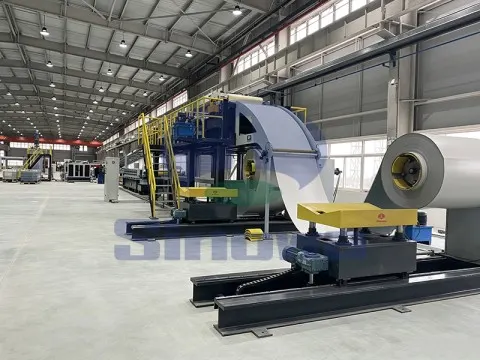
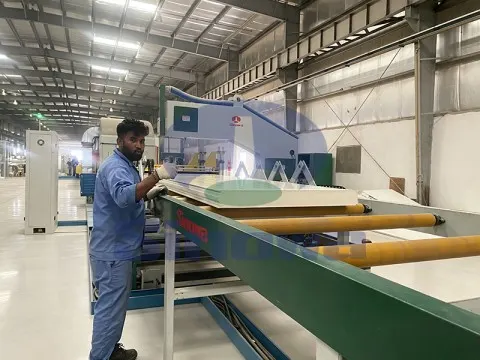
Tags: sandwich panel production equipment, sandwich panel production equipment manufacturer, sandwich panel production equipment supplier, china sandwich panel production equipment, sandwich panel production equipment for sale
https://www.sandwichpanelmachinery.com/tags/sandwich-panel-production-equipment.html
-
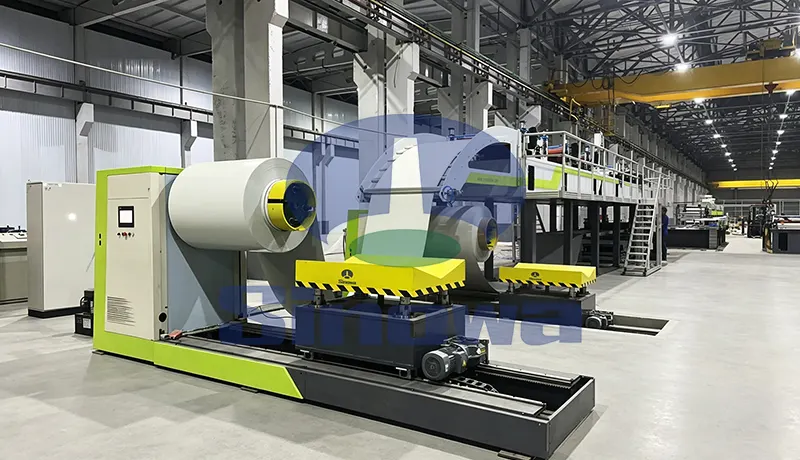
The PU sandwich panel line is a core production setup for making high-performance building insulation panels. This professional PU sandwich panel production line features automated operation to streamline the whole manufacturing process efficiently. Every component of the polyurethane sandwich panel line is precisely calibrated to ensure consistent panel thickness and structural stability. A well-maintained polyurethane sandwich panel production line can greatly boost production efficiency while reducing manual operation errors. The continuous PU sandwich panel line adapts to diverse production demands for different panel sizes and surface styles. With advanced molding technology, the PIR sandwich panel line produces panels with excellent heat preservation and sound insulation properties. Stable running of the PIR sandwich panel production line guarantees reliable product quality for various construction and industrial application scenarios.
-
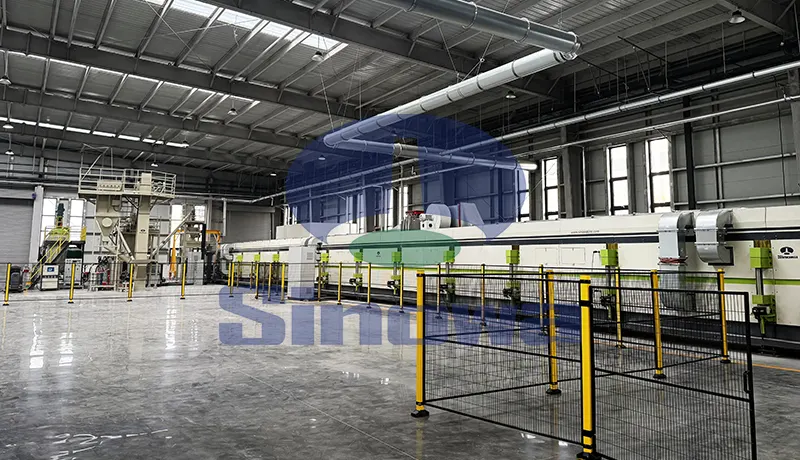
A phenolic insulation board production line serves as the core equipment for manufacturing high-performance thermal insulation building materials. This phenolic insulation panel production line integrates material mixing, foaming, molding and cutting processes to ensure continuous and stable production efficiency. Every operational link of the insulation board production line is precisely calibrated to produce uniform and durable insulation boards. The automated design of the insulation panel production line effectively reduces manual intervention and improves product consistency. Proper maintenance of the phenolic board production line can greatly extend its service life and maintain steady production output. With optimized structural design, the phenolic panel production line adapts to various production demands and delivers high-quality finished products for thermal insulation engineering applications.
-
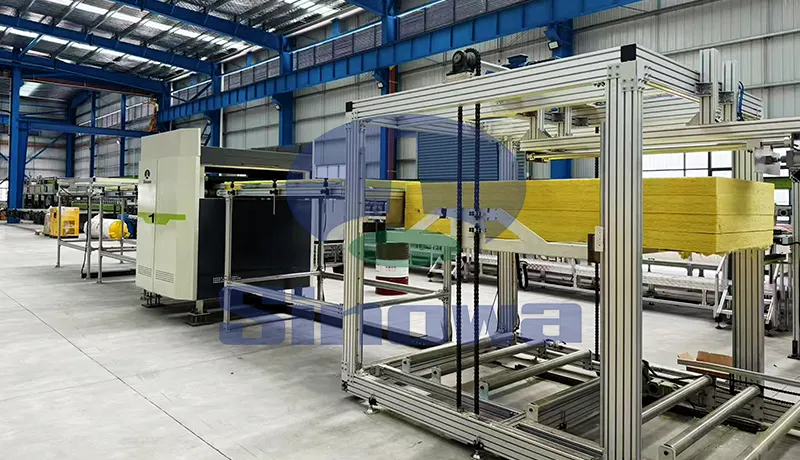
A professional rockwool sandwich panel line serves as the core equipment for producing high-performance building panels. This rockwool sandwich panel production line integrates feeding, laminating and forming processes to ensure stable and efficient production. The well-structured rock wool sandwich panel line can process raw rockwool materials into panels with excellent thermal and sound insulation properties. Operators can adjust the running parameters of the rock wool sandwich panel production line to manufacture panels of different thicknesses and specifications. The automated design of the mineral wool sandwich panel production line greatly reduces manual operation errors and improves product consistency. Regular maintenance of the mineral wool sandwich panel line is essential to sustain long-term operational efficiency and guarantee qualified finished panels for diverse construction applications.