High Efficiency Sandwich Panel Line
Publication Date: Oct 27, 2026
High Efficiency Sandwich Panel Line: fully automatic continuous production system for insulated composite panels. Integrated feeding, laminating, curing, trimming and cutting, with precise control, stable bonding and flexible size adjustment. Ideal for building envelope, partition and modular panel manufacturing, cutting labor and material waste for consistent mass output.

High Efficiency Sandwich Panel Line represents a sophisticated integrated production system built to streamline the full manufacturing workflow of composite sandwich panels, bringing together material feeding, continuous forming, lamination, curing, trimming and cutting within one connected production framework. Unlike scattered standalone processing machines that require frequent manual transfer of semi-finished materials between stations, this line is engineered to maintain uninterrupted material flow from the moment raw facings and core substrates enter the system until finished panels are discharged at the output end. Every functional unit is precisely synchronized through coordinated control logic, which minimizes idle time and reduces unnecessary handling that often causes surface scratches, alignment deviations or structural damage to panel materials. Operators are able to adjust core parameters such as feeding speed, bonding pressure and curing temperature through a centralized control interface, adapting the operation to match different combinations of facing sheets and core materials. The inherent design focuses on stable running performance under long continuous working cycles, lowering the frequency of temporary shutdowns for routine adjustment and troubleshooting, and laying a solid foundation for consistent output of panels with uniform thickness, flat surface and reliable bonding performance across every batch produced.
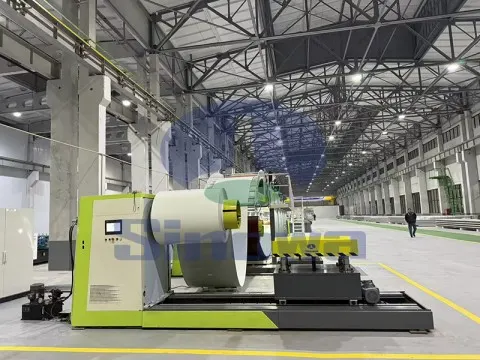
The material feeding section of the high efficiency sandwich panel line is developed to handle multiple types of surface facings and core materials with flexible loading structures that accommodate rolls or bulk core supplies without complicated reconfiguration. Facing material unwinding devices maintain steady tension control to prevent wrinkling, stretching or uneven slack during feeding, a common issue that can compromise the straightness and dimensional accuracy of finished panels. Core material conveying components guide insulating or structural core layers into the assembly zone at a matched rate, ensuring that the core strips align perfectly with the upper and lower facings before the bonding process starts. Auxiliary feeding modules can dispense adhesive substances evenly across the contact surfaces between facings and core, avoiding excess adhesive accumulation or uncovered gaps that would weaken the composite bond. Sensors distributed along the feeding path detect material shortage, offset or breakage signals in real time, triggering gentle speed reduction or pause actions to prevent defective products from moving forward into subsequent forming stages. This thoughtful feeding design eliminates many early-stage defects, reduces material waste and supports the overall high-efficiency rhythm of the whole production sequence.
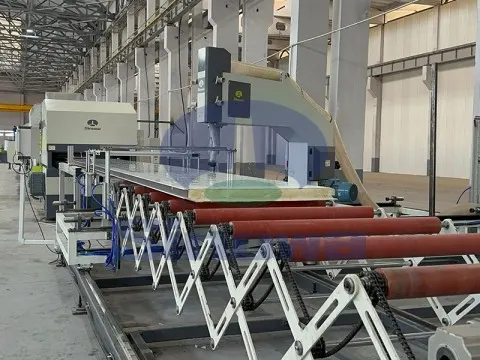
Forming and lamination stands as the core working stage where separate raw components combine into an integrated sandwich structure, and the high efficiency sandwich panel line adopts compact pressing assemblies that deliver consistent and evenly distributed pressure across the entire panel width. The pressing mechanism avoids localized overpressure which might crush lightweight core materials or create indentations on outer facings, while also preventing insufficient pressure that leads to poor adhesion and delamination risks after installation. As materials pass through the lamination zone, the relative position of upper and lower pressing rollers stays locked according to preset thickness values, keeping dimensional tolerance stable over long production runs. Internal guiding structures correct minor lateral drift of materials automatically, so panels maintain straight edges without frequent manual correction by on-site staff. This continuous lamination process replaces slower batch pressing methods that require loading and unloading individual workpieces one by one, greatly lifting the hourly production capacity while preserving the structural integrity of the composite sandwich structure.
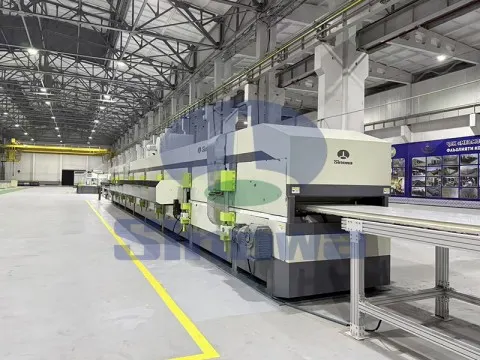
Controlled curing inside the high efficiency sandwich panel line creates a stable thermal environment that allows bonding agents to complete cross-linking and solidification at an optimized pace, balancing curing quality with production speed. The thermal system distributes heat uniformly over the panel surface instead of concentrating heat on limited areas, which prevents thermal deformation, bubbling or discoloration of outer facings and stops core materials from thermal degradation. Temperature distribution can be fine-tuned according to the thermal characteristics of different adhesives and core materials, so the line can switch between different product specifications without long waiting periods for thermal adjustment. The length of the curing tunnel is calculated to provide sufficient dwell time for full bonding reaction at the normal operating speed, so panels exiting the curing section already possess most of their final bonding strength. This inline curing setup removes the need for separate storage spaces for slow natural curing, saves factory floor space and removes an extra waiting step that would otherwise slow down the whole production cycle.
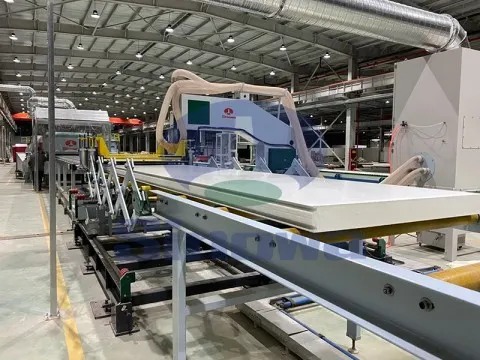
After curing, the trimming and cutting module processes continuous long panel stock into finished panels of custom lengths and clean edge profiles, working in perfect sync with the forward speed of the production line. Edge trimming tools remove uneven side margins generated during forming, producing straight, neat edges that simplify later assembly for end users and reduce secondary processing work at construction or fabrication sites. The cutting unit uses dynamic tracking technology that follows the moving panel continuously, cutting to specified lengths without requiring the line to stop or slow down for each cut. Cutting parameters can be updated quickly through the main control system to switch between different panel length requirements, supporting mixed production orders within the same production run. Dust and debris generated during trimming and cutting are collected by attached extraction structures, keeping the working area tidy and preventing debris from sticking onto fresh panel surfaces and causing cosmetic flaws. This integrated post-forming processing stage ensures that panels coming off the line are nearly ready for inspection and packaging.
The control and monitoring system of the high efficiency sandwich panel line serves as the central nerve connecting all individual functional segments, enabling unified regulation and real-time status observation of the whole production process. Operating data including running speed, pressure readings, thermal parameters and counter values are displayed clearly for operators, making it easy to spot abnormal fluctuations before they develop into large-scale quality problems. The system stores parameter sets for commonly produced panel configurations, allowing operators to recall proven settings rapidly when switching product types instead of resetting every parameter manually. Built-in protection logic responds to abnormal conditions such as material jamming, excessive temperature or motor overload with graded warning prompts and protective actions to safeguard both equipment and semi-finished products. Data records generated during operation can be reviewed to analyze production stability, identify recurring minor issues and guide later fine-tuning of equipment running conditions, supporting sustained stable and high-efficiency operation over extended periods.
Operational convenience and maintenance friendliness are embedded into the design philosophy of the high efficiency sandwich panel line, lowering skill barriers for on-site teams and shortening downtime needed for routine upkeep. Key wearing parts and consumable components are arranged at accessible positions, so technicians can complete replacement, cleaning and lubrication work without extensive disassembly of large assemblies. Safety guard structures surround rotating rollers, cutting tools and thermal sections, reducing exposure risks for personnel during normal operation and inspection. The layout of the whole line follows a linear material flow path that fits reasonably inside standard factory workshops, and it can be adjusted in layout arrangement to match available space and logistics routes of different production sites. Training for routine operation focuses on familiarization with the control interface, common alarm handling and daily inspection checkpoints, so new operators can achieve stable operation after a reasonable training period. These human-oriented design features help maintain high overall equipment availability and keep the production line delivering its designed output consistently.
In practical application, the high efficiency sandwich panel line brings tangible improvements to composite panel manufacturing by raising output capacity, stabilizing finished quality and cutting comprehensive production costs related to material loss and extra labor input. Panels manufactured on this continuous line find wide use in building envelope systems, modular enclosure structures, clean space partitions and other scenarios that demand both thermal performance and structural stability. The flexible adaptability of the equipment supports development of new panel combinations as application requirements evolve, helping manufacturers respond swiftly to shifting market demands without major equipment overhaul. By reducing manual intervention across the main production stages, the line also lessens the chance of human error affecting product consistency, making production results more predictable batch after batch. As the market continues to seek reliable composite panel solutions, this type of continuous production line stands as a practical and efficient manufacturing solution that aligns with the pursuit of stable quality, streamlined workflows and optimized resource utilization in modern panel production.
Gallery of High Efficiency Sandwich Panel Line
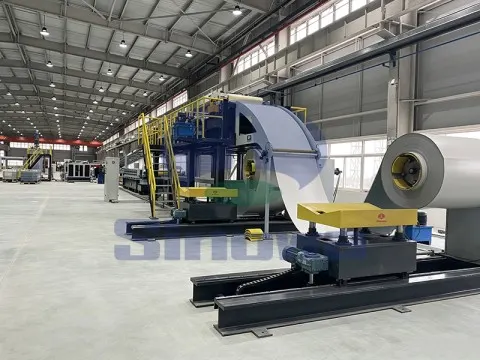
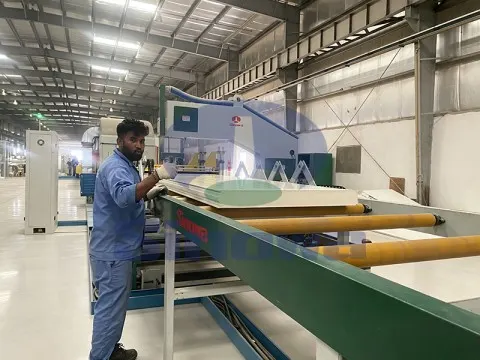
Tags: high efficiency sandwich panel line, high efficiency sandwich panel line manufacturer, high efficiency sandwich panel line supplier, china high efficiency sandwich panel line, high efficiency sandwich panel line for sale
https://www.sandwichpanelmachinery.com/blog/high-efficiency-sandwich-panel-line.html
-
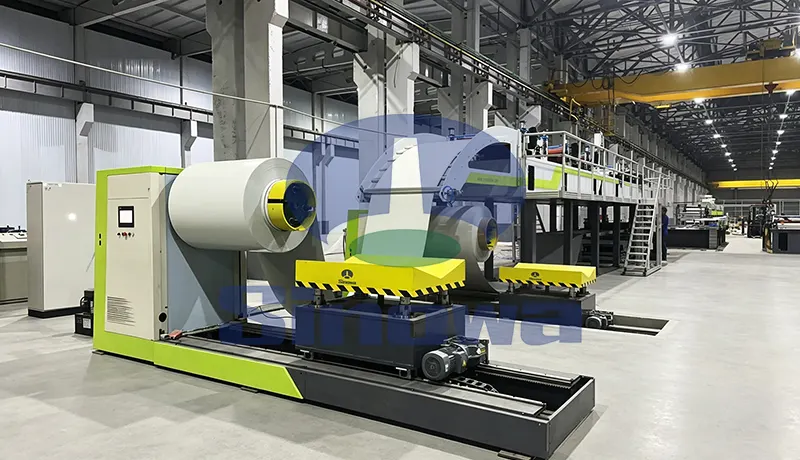
The PU sandwich panel line is a core production setup for making high-performance building insulation panels. This professional PU sandwich panel production line features automated operation to streamline the whole manufacturing process efficiently. Every component of the polyurethane sandwich panel line is precisely calibrated to ensure consistent panel thickness and structural stability. A well-maintained polyurethane sandwich panel production line can greatly boost production efficiency while reducing manual operation errors. The continuous PU sandwich panel line adapts to diverse production demands for different panel sizes and surface styles. With advanced molding technology, the PIR sandwich panel line produces panels with excellent heat preservation and sound insulation properties. Stable running of the PIR sandwich panel production line guarantees reliable product quality for various construction and industrial application scenarios.
-
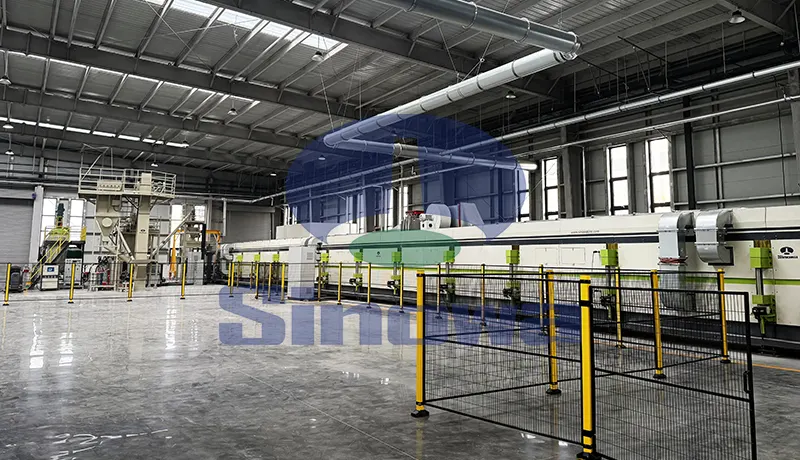
A phenolic insulation board production line serves as the core equipment for manufacturing high-performance thermal insulation building materials. This phenolic insulation panel production line integrates material mixing, foaming, molding and cutting processes to ensure continuous and stable production efficiency. Every operational link of the insulation board production line is precisely calibrated to produce uniform and durable insulation boards. The automated design of the insulation panel production line effectively reduces manual intervention and improves product consistency. Proper maintenance of the phenolic board production line can greatly extend its service life and maintain steady production output. With optimized structural design, the phenolic panel production line adapts to various production demands and delivers high-quality finished products for thermal insulation engineering applications.
-
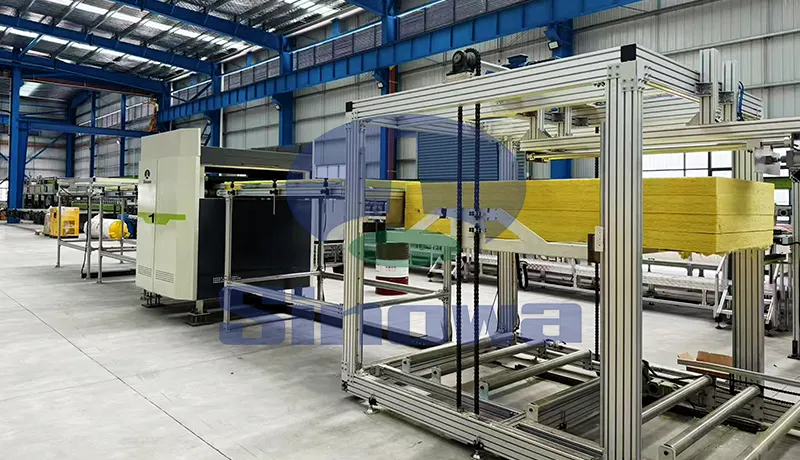
A professional rockwool sandwich panel line serves as the core equipment for producing high-performance building panels. This rockwool sandwich panel production line integrates feeding, laminating and forming processes to ensure stable and efficient production. The well-structured rock wool sandwich panel line can process raw rockwool materials into panels with excellent thermal and sound insulation properties. Operators can adjust the running parameters of the rock wool sandwich panel production line to manufacture panels of different thicknesses and specifications. The automated design of the mineral wool sandwich panel production line greatly reduces manual operation errors and improves product consistency. Regular maintenance of the mineral wool sandwich panel line is essential to sustain long-term operational efficiency and guarantee qualified finished panels for diverse construction applications.