Glass Wool Sandwich Panel Machine
Publication Date: Oct 26, 2026
Fully automatic glass wool sandwich panel machine for continuous production of insulated wall & roof panels. Features synchronized feeding, glue coating, pressing, curing, cutting and stacking. Stable operation, adjustable specs for thermal insulation building panels.

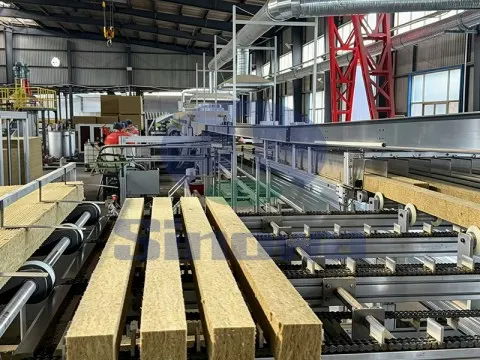
Glass wool sandwich panel machine stands as a sophisticated integrated production system designed to continuously combine glass wool core materials with metal facings into finished composite panels, serving as a core piece of equipment for modern lightweight enclosure manufacturing. The whole production line links multiple functional units together in a stable sequential flow, removing the need for scattered manual bonding and shaping work that was common in early panel fabrication methods. Raw glass wool rolls enter the production line from the feeding section, where guiding devices keep the fibrous core material aligned steadily without shifting or wrinkling as it moves forward. At this stage, auxiliary rollers adjust the tension of the glass wool to maintain uniform thickness across the entire width, preventing local compression that would weaken the thermal performance of the final product. Metal sheets, usually supplied in coil form, are unwound synchronously on both the upper and lower sides of the glass wool layer, with surface treatment modules preparing the sheet surface to create reliable adhesion between metal and fibrous core. Every movement speed of different feeding parts is matched through coordinated control, so the core and facings advance at the same pace and avoid relative displacement during the subsequent bonding process. Operators can make fine adjustments to feeding parameters through the central control interface to adapt to different raw material specifications and production targets, ensuring the basic structure of each panel stays consistent from the very start of production.
The adhesive application section of glass wool sandwich panel machine carries out the critical task of spreading bonding medium evenly on the contact surfaces between glass wool and metal sheets, which directly decides the long-term bonding strength and structural stability of finished panels. This unit adopts controlled coating methods to avoid excessive glue overflow or partial missing coating, both of which can lead to delamination, hollow areas or uneven surface appearance after forming. The glue distribution system regulates flow rate according to the running speed of the line, so the coating weight remains consistent even when production speed changes within the adjustable range. Since glass wool has porous fibrous structures, the spreading process is calibrated to let adhesive lightly infiltrate the outer fiber layer without soaking deep into the core and ruining its inherent thermal insulation traits. After coating, pressing guides gently bring the upper metal sheet, adhesive layer, glass wool core and lower metal sheet into preliminary contact, and minor deviation correction structures trim the edges of the combined material to keep the composite blank neat before it enters the curing stage. Dust removal attachments work alongside the coating unit to clear loose glass fiber debris from the bonding surfaces, as floating fine fibers would otherwise form barriers and reduce the reliability of the glue connection over time. All adhesive related operations run in a closed working area to reduce scattering of bonding materials and fine fibers, maintaining a cleaner working environment for the whole production process.
Continuous pressing and curing section forms the main shaping stage inside glass wool sandwich panel machine, where the loosely combined raw material assembly is compressed and held under stable pressure to complete the curing reaction of the adhesive system. The pressing framework uses multiple sets of parallel pressing rollers or plate pressing modules to apply uniform pressure across the full width of the composite blank, so the glass wool core is compressed to the preset thickness evenly and no uneven bulges or depressions appear on the panel surface. Pressure values can be modified based on the density and thickness of the glass wool used, as different core material characteristics require different compression degrees to reach the designed panel rigidity and insulation effect. Internal temperature control components maintain a suitable curing environment inside the pressing channel, supporting the adhesive to finish cross-linking steadily without rapid curing flaws that may cause internal stress. The travelling speed through the curing zone is matched with the curing cycle of the selected adhesive, giving enough time for bonding structures to develop fully before the panel leaves the pressing section. During this phase, the integrated composite gradually turns from separate raw layers into an integrated rigid panel, where metal skins and glass wool core cannot separate under normal handling force. Vibration damping parts fitted on the pressing frame absorb mechanical vibration generated by roller rotation, stopping vibration from creating tiny gaps inside the fresh composite and damaging the bonding effect. Stable operation in this section lays the foundation for the finished panel to maintain flat shape and stable performance in later transportation and application.
After the composite material exits the pressing and curing area, the glass wool sandwich panel machine moves on to the edge trimming and continuous cutting procedure, which shapes the endless long panel blank into individual panels of required dimensions. Edge trimming tools cut off irregular excess material on both sides of the panel, straightening the side edges and making the panel width accurate and uniform for convenient assembly on construction sites. The trimmed waste material is collected by a guiding chute for centralized collection, which simplifies waste management and reduces scattered fiber waste around the equipment. The cutting unit follows the preset length signal automatically, executing transverse cutting at precise positions while the panel keeps moving forward, supporting uninterrupted continuous production instead of stop-and-cut intermittent operation. Cutting blades are designed to slice through both metal facings and glass wool core smoothly, minimizing torn fiber burrs and deformed metal edges on the cut end face. Sensors track the travelling length of the panel blank in real time and feed data back to the control system, correcting small accumulated length errors automatically over long production runs. Operators can input different target length values directly on the control panel, letting the machine switch between multiple finished panel sizes without complicated mechanical reconfiguration. This processing segment ensures every finished panel meets the dimensional requirements for installation, lowering the workload of secondary trimming after panels leave the production line.
Surface finishing and conveying modules of glass wool sandwich panel machine handle the final surface conditioning and orderly transfer of cut panels, improving surface quality and facilitating subsequent stacking and packing work. Soft brushing attachments clear fine glass fiber scraps and tiny glue residues left on the metal surface after cutting and trimming, preventing hard particles from scratching the coated metal surface. Some configurations include light pressing and smoothing rollers to fix minor surface warping that may appear after cutting, keeping the panel flat before stacking. Conveying belts run at a matched speed to receive cut panels one by one and transport them towards the stacking station, with buffer sections slowing the panel movement slightly to avoid collision damage between newly cut panels. Positioning baffles arrange each panel into neat alignment on the conveyor, so panels arrive at the stacking position in consistent orientation. The conveying system supports flexible speed adjustment to coordinate with upstream cutting rhythm, preventing panel jamming or gaps that disrupt continuous workflow. Protective covering rollers can be activated when needed to attach thin protective film on panel surfaces, shielding the metal coating from scratches during handling, transportation and storage. This part of the line acts as a gentle transition between cutting and finished product collection, protecting the finished panels from surface damage before they leave the production area.
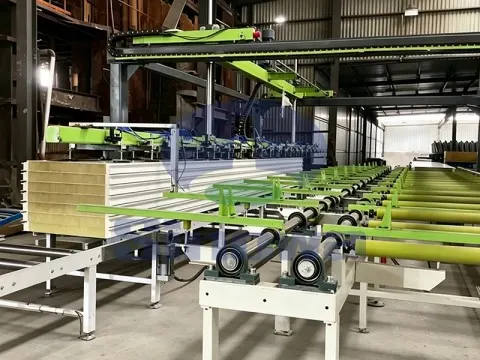
The automatic stacking subsystem connected to glass wool sandwich panel machine takes charge of neatly stacking finished panels and reducing heavy repetitive manual lifting work in the production workshop. After panels reach the stacking station, positioning stoppers align each panel accurately in both length and width directions, forming tidy stacks with consistent alignment of all panel edges. Lifting and traversing mechanisms pick up single panels steadily from the conveyor and place them onto the stacking platform, with adjustable placement speed to avoid impact force that may bend panel corners or loosen internal bonding. The system can set the target quantity for each stack, pausing stacking automatically once the preset number of panels is completed and sending a signal for the finished stack to be moved away. Separation spacers can be placed between panel layers through auxiliary structures if required, stopping direct friction between metal surfaces and lowering the risk of surface abrasion. Safety sensing devices surround the stacking working range; when foreign objects enter the active moving zone, the stacking action pauses immediately to reduce potential safety risks for nearby staff. Stacked panels maintain stable shape and arrangement, making it easier for subsequent wrapping and loading operations. This automated part greatly raises the overall production efficiency of the whole line and lessens the physical burden on on-site workers who used to handle stacking manually.
Central control and monitoring system serves as the command core of glass wool sandwich panel machine, integrating all functional sections into one coordinated and controllable production unit. The human-machine interface displays real-time data including feeding speed, coating flow, pressing pressure, curing temperature, cutting count and finished panel output, allowing operators to observe the whole production state at a glance. Parameter settings for each working unit can be modified centrally, and adjusted parameters will synchronize across linked parts of the line to maintain matching operation rhythm. The system stores commonly used production parameter groups for different panel specifications, so operators can recall saved settings quickly when switching product types instead of resetting every single value repeatedly. Fault detection functions continuously collect feedback signals from sensors distributed across the machine. When abnormal conditions such as raw material blockage, pressure deviation or motor overload appear, the system gives clear warning prompts and can trigger partial or full line shutdown according to the severity of the fault, helping avoid equipment damage and defective product accumulation. Operation records are kept automatically, tracking production volume and abnormal events for later review and routine maintenance planning. Simple and logical interface design lowers the learning difficulty for operators, enabling skilled and stable operation after proper familiarization with core functions of the line.
Routine maintenance and long-term operation management of glass wool sandwich panel machine determine its service life, stable running performance and the consistency of panel quality over years of continuous use. Regular inspection focuses on rotating parts such as unwinding rollers, pressing rollers, conveyor rollers and cutting drive components, checking lubrication status, wear degree and tightness of transmission chains and belts to reduce abnormal noise and position deviation during operation. Sealing components of the adhesive circulation system need periodic inspection and replacement to prevent glue leakage that may contaminate rollers and the surrounding frame. Sensors and signal wiring should be cleaned and checked regularly, as accumulated fiber dust can interfere with signal transmission and cause inaccurate length or speed feedback. The cutting blades require scheduled sharpening or replacement, because dull blades create rough cut surfaces and increase load on the driving motor. Operators follow a planned cleaning schedule to clear accumulated glass fiber dust and cured glue residues inside closed working sections, avoiding buildup that hinders material movement or pollutes new panels. Proper maintenance not only cuts down unexpected downtime and repair costs, but also keeps dimensional accuracy and bonding quality of produced panels stable for a long period. With careful operation and standardized upkeep, this production equipment can maintain reliable continuous output and support steady supply of glass wool sandwich panels for various building enclosure projects.
Gallery of Glass Wool Sandwich Panel Machine

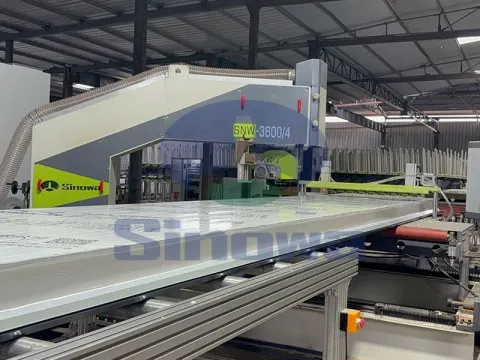
Tags: glass wool sandwich panel machine, glass wool sandwich panel machine manufacturer, glass wool sandwich panel machine supplier, china glass wool sandwich panel machine, glass wool sandwich panel machine for sale
https://www.sandwichpanelmachinery.com/blog/glass-wool-sandwich-panel-machine.html
-
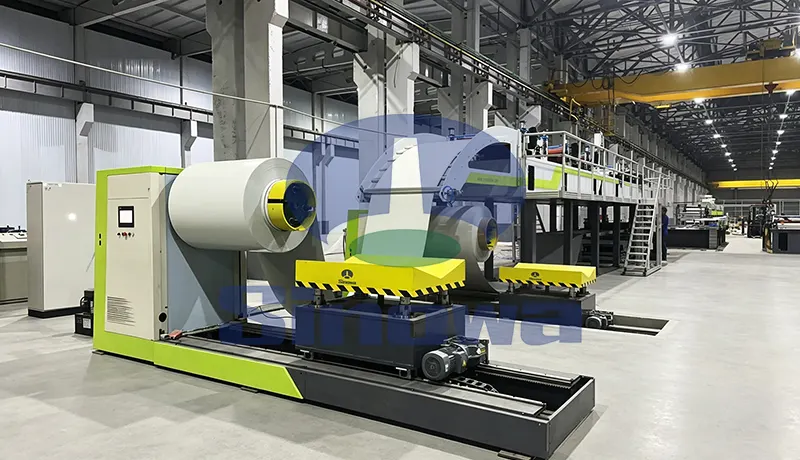
The PU sandwich panel line is a core production setup for making high-performance building insulation panels. This professional PU sandwich panel production line features automated operation to streamline the whole manufacturing process efficiently. Every component of the polyurethane sandwich panel line is precisely calibrated to ensure consistent panel thickness and structural stability. A well-maintained polyurethane sandwich panel production line can greatly boost production efficiency while reducing manual operation errors. The continuous PU sandwich panel line adapts to diverse production demands for different panel sizes and surface styles. With advanced molding technology, the PIR sandwich panel line produces panels with excellent heat preservation and sound insulation properties. Stable running of the PIR sandwich panel production line guarantees reliable product quality for various construction and industrial application scenarios.
-
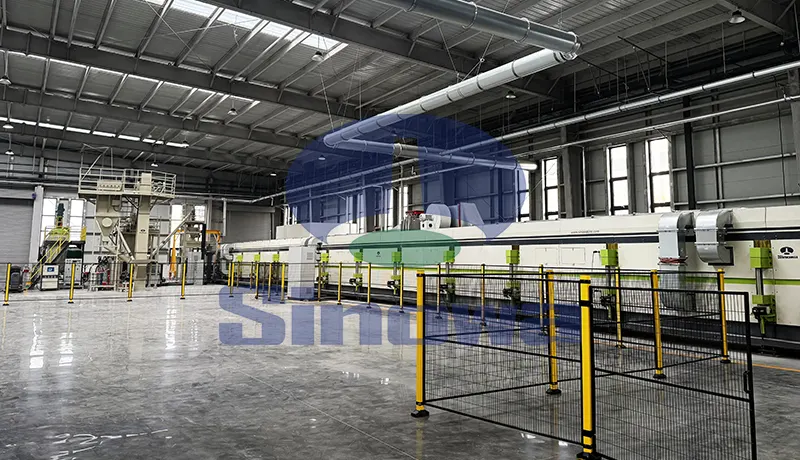
A phenolic insulation board production line serves as the core equipment for manufacturing high-performance thermal insulation building materials. This phenolic insulation panel production line integrates material mixing, foaming, molding and cutting processes to ensure continuous and stable production efficiency. Every operational link of the insulation board production line is precisely calibrated to produce uniform and durable insulation boards. The automated design of the insulation panel production line effectively reduces manual intervention and improves product consistency. Proper maintenance of the phenolic board production line can greatly extend its service life and maintain steady production output. With optimized structural design, the phenolic panel production line adapts to various production demands and delivers high-quality finished products for thermal insulation engineering applications.
-
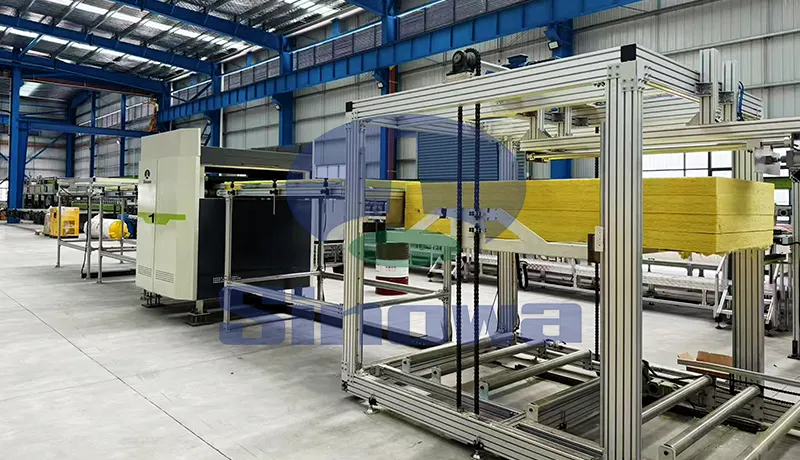
A professional rockwool sandwich panel line serves as the core equipment for producing high-performance building panels. This rockwool sandwich panel production line integrates feeding, laminating and forming processes to ensure stable and efficient production. The well-structured rock wool sandwich panel line can process raw rockwool materials into panels with excellent thermal and sound insulation properties. Operators can adjust the running parameters of the rock wool sandwich panel production line to manufacture panels of different thicknesses and specifications. The automated design of the mineral wool sandwich panel production line greatly reduces manual operation errors and improves product consistency. Regular maintenance of the mineral wool sandwich panel line is essential to sustain long-term operational efficiency and guarantee qualified finished panels for diverse construction applications.